

We’re all addicted to the “hustle.” And the current AI bubble is just a catalyst for that unhealthy growth mindset. That impacts our pragmatism as engineers and product developers of all classes.
To understand quality assurance over anything else today, I have to borrow some pages from Japan. But first, let’s burn your builder ego and make you realize how hard it is to do things alone as a self-sabotaging researcher in any technical field. For that, if you could use some pats on your back or just want to collaborate in any sense, I would invite you to join my paid subscribers’ chat here or just send me emails directly. I read all my emails, and would love to have bi-directional learning projects together!

“Move fast and break things.” “Ship fast.” “Get it to the market first, then think of sleeping.”

We celebrate the chaotic launch, the all-night coding sprint, and the inevitable “tech debt” we promise to fix later. We build rockets designed to explode on the launchpad, all for the sake of speed.
Living in Japan as an international student, I’ve started to see over time how deeply flawed this (quite literally my own generation’s) fast shipping mentality is …
Here in Japan, they don’t build rockets. They build something like a “Shinkansen” — the fancy bullet trains! Boringly reliable, relentlessly efficient, and always, always on time. Sense some pragmatism in the delivery by design? It gets deeper. And very discretionarily, generational.
I’m studying Global Economics and a bit of Data Sciences. Still, frankly and quite obviously, my biggest lessons in understanding or creating a sustainable business and design sense for a well-received product line aren’t quite coming from my classrooms. They’re coming from observing the philosophy that powers the product creation — and the Japanese workflow — around me. It’s a concept called `Monozukuri` (ものづくり), and it’s not just “manufacturing.” It’s the “art of making things.”
And it will change how you think about building a company.
Take it from the country that had built Casio! When Casio entered the watch business in the 1970s, timepieces were considered delicate instruments. This conventional wisdom was shattered in 1981 when a young engineer named Kikuo Ibe accidentally broke a treasured pocket watch given to him by his father. This personal loss sparked a vision: to create an “everlasting” watch that would not break, even if dropped.
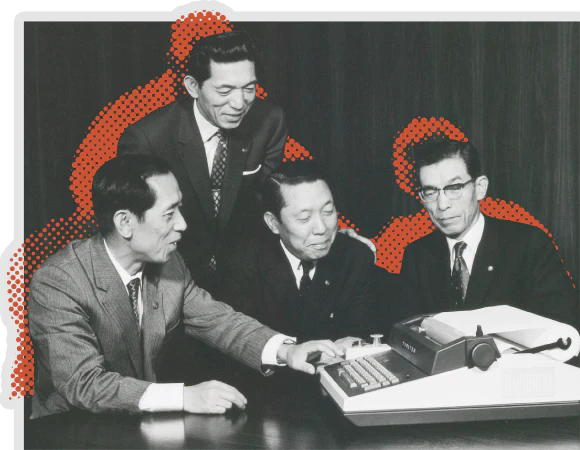
Ibe assembled “Project Team Tough” and began a grueling two-year process of trial and error, developing over 200 prototypes. His goal, known as the “Triple 10” philosophy, was a watch that could withstand a 10-meter drop, had 10-bar water resistance, and a 10-year battery life. Putting myself in Ibe-san’s shoes, I really wouldn’t be so confident the then, to assume a watch can tick ten long years, where it’s clearly a luxurious fashion statement. Casio, in my opinion, redefined the market.
Tsuru wa sennen, kame wa mannen (鶴は千年、亀は万年)
“Cranes live for 1,000 years, tortoises for 10,000.” Pairing the tortoise with the crane as the ultimate symbols of auspiciousness. In traditional Japanese aesthetics, things that last longer are considered more beautiful than things that are new and flashy.
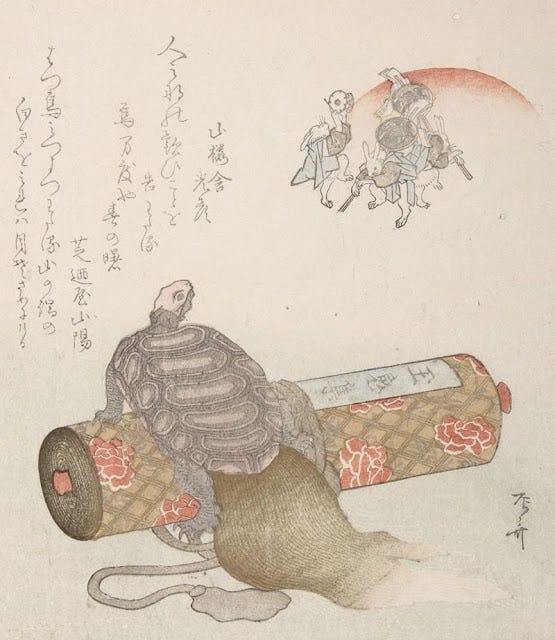
The Japanese concept of Monozukuri is deeply tied to this philosophy of endurance coming from a tortoise. A Shokunin (craftsman) will often spend decades perfecting a single technique. They do not view “time taken” as a cost; they view it as an ingredient. Like the Minogame growing its tail, a sign of experience and traveling across the sea collecting seaweed, the Shokunin believes that quality is a layer-by-layer accumulation like that, which just cannot be rushed. So what is in there for you?
Stop the Line. No, Seriously.
In the West, if we find a bug that affects 0.1% of users, what do we do? We log it. It becomes a P4 ticket, rotting in a backlog until the heat death of the universe.
I learned about a Japanese team that recently did the opposite: they stopped the entire production line. All work. For two days. All to fix a tiny edge-case bug.
My first thought was, “That’s insane. What a waste of velocity.”
I was wrong.
Instead of massive refactoring sprints or complete rewrites, they make tiny, continuous improvements. Every day. Every commit.
Here’s what that looks like in practice:
// Western approach: “Let’s refactor this entire module next sprint”
function processUserData(users) {
  // 200 lines of increasingly complex code
  return results;
}

// Japanese approach: “Let’s improve this function by 1% today”
function processUserData(users) {
  // Today: extract one small helper function
  const validUsers = filterValidUsers(users);
  // Tomorrow: maybe extract another small piece
  // Next week: optimize one specific case
  return processValidUsers(validUsers);
}
The Japanese developer doesn’t wait for permission to improve code. They don’t schedule “tech debt sprints.” They just make things a little bit better, every single day.
This is the first stoppage to creating that long-term mindset. It is `Jidoka` (自動化), a principle from the Toyota Production System. It’s the “stop the line” RIGHT NOW mentality. The moment a defect is found, everything stops until it’s fixed.
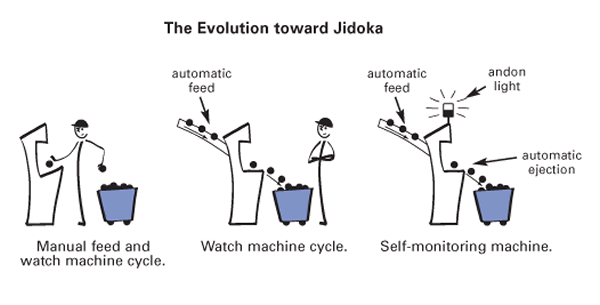
And I think, Japan is so ahead in robotics, is because of having Jidoka early on in their work-ethic and expectation, and bolstering their mindset more towards unforgivingness to any err in a production environment adds more glaze to it.
When I was busy calling a function from OpenCV to train the eyes of a Mars Rover before coming to Japan, I remember, I just finished installing the VMware pro, and starting off at Ubuntu. Also learning ROS and making contributions for the University Rover Challenges without even knowing what is object-oriented programming that time. I wanted to move fast, and break things. My code was always the first to test run on the Jetson nano, but for the competition it was my senpai Mahim’s code of wisdom that made our rover best in the country for years!
To do simulations in a sandbox is one thing. And delivering feature to a running application is another. Why? Because one, we have to refuse to normalize defects. And two, delivering is not our first priority anymore!
The first priority is
